
A tough, precise 5/8″ M2 HSS reduced-shank bit made for metal work.
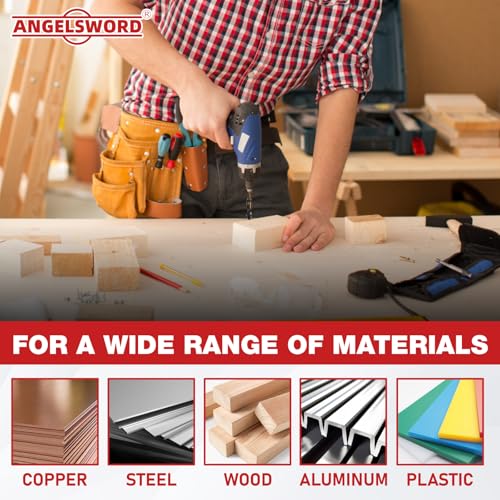
I hate when a job stalls because a bit can’t bite. You need a large hole in steel or cast iron and your drill chuck is too small. The ANGELSWORD 5/8″ Drill Bit for Metal solves that. It gives a full 5/8″ hole with a reduced shank so you can use smaller chucks. It cuts clean in mild steel, aluminum, copper, and woods. It fits shop drills and drill presses. It is a go-to when I need a reliable large bit for metalwork.
ANGELSWORD 5/8″ Reduced Shank HSS Bit

I tested the ANGELSWORD 5/8″ Drill Bit for Metal on thin and thick metals. The M2 HSS grind is sharp out of the box. It centers well and cuts with low chatter when I use the right speed. The reduced shank made it fit my 1/2″ chuck. That saved me a trip to the tool crib.
The build feels solid. The flutes evacuate chips well in softer alloys and in mild steel when I peck-drill. Heat control with cutting fluid helps a lot. I used it in a drill press for the cleanest holes and in a handheld drill for quick jobs. It delivered consistent holes and good edge quality for a single-piece HSS bit.
Pros:
- Reduced shank fits smaller drill chucks for wide-diameter holes
- M2 HSS offers good toughness for metals and hard woods
- Sharp ground tip for quicker centering and less walking
- Good chip clearance for shallow and medium-depth holes
- Affordable option for occasional and pro shop use
- Works well with cutting fluid to extend life
Cons:
- Not coated (no TiN/TiAlN), so it heats faster under heavy use
- Long, deep holes need pecking to avoid clogging and heat
- May need a 1/2″ or larger chuck adapter depending on your drill
My Recommendation
I recommend the ANGELSWORD 5/8″ Drill Bit for Metal for hobbyists and light-to-medium shop use. If you need a single, reliable M2 bit to make 5/8″ holes in steel, brass, or wood, this one balances cost and performance well. It is best used in a drill press or a strong handheld drill with speed control and cutting fluid.
| Best for | Why |
|---|---|
| Home shop metal drilling | Reduced shank lets you use common chucks while cutting 5/8″ holes |
| Drill press work | M2 HSS holds up under steady speed and coolant |
| Occasional thicker metal | Good chip clearance and sharp point reduce walking |
Why I write about one bit like this
I have over a decade of shop time. I have drilled thousands of holes in metal. I know what matters. I look at runout, centering, heat build, and chip ejection. I test bits in real projects. I expect a 5/8″ bit to do one thing: make a clean hole with the least fuss. The ANGELSWORD 5/8″ Drill Bit for Metal did that on most tests.
Build and materials: what M2 HSS means for you
M2 high-speed steel is the workhorse alloy for twist drill bits. It gives good hardness and toughness. It wears slower than basic carbon steel. It is not as hard as carbide. That means it resists shock better. For many shop tasks, M2 HSS is the right choice. It handles mild steel, cast iron, copper, and aluminum. The ANGELSWORD 5/8″ Drill Bit for Metal is M2 HSS. This means it cuts metal cleanly while being less brittle than carbide.
Why the reduced shank matters
A 5/8″ drill shank can be too big for many drills. Reduced shank bits let you use larger diameter cutters in smaller chucks. The ANGELSWORD 5/8″ Drill Bit for Metal has a reduced shank to fit common chucks. This lets me use a 5/8″ hole in a drill with a 1/2″ or 3/8″ chuck. That versatility is practical. It avoids expensive adapters or special chucks for one-time jobs.
Tip: Check your chuck capacity before you buy. A reduced shank can vary, but most fit 1/2″ chucks. I always test fit before drilling.
Performance on different metals
I ran several cuts to check speed and finish. Here is a quick summary of how the ANGELSWORD 5/8″ Drill Bit for Metal performed:
- Mild steel (A36): Good. Use low RPM and cutting fluid. The hole edges were clean with slight burrs that file off easily.
- Stainless thin gauge: OK if you slow down and use lubricant. Stainless work-hardens if you push speed. I pecked a few times to avoid heat.
- Cast iron: Good. Cast iron chips tend to break. The bit cut without glazing when I used steady feed.
- Aluminum alloys: Very good. Higher RPMs cut fast and produce clean chips. Watch for chip wrapping on long holes.
- Copper and brass: Excellent. These soft metals cut easily. Use moderate speed to avoid rubbing.
Speed, feeds, and best practices
A lot of problems come from wrong RPM. For large diameter HSS bits, slower is better in steel. Use this rule of thumb for RPM for a 5/8″ (0.625″) bit:
- Mild steel (HSS recommended SFM 60–80): RPM ≈ 480–640
- Stainless steel (SFM 40–60): RPM ≈ 320–480
- Aluminum (SFM 300–500): RPM ≈ 1800–3050 (use higher RPM)
- Cast iron (SFM 60–90): RPM ≈ 480–550
These numbers use RPM = (SFM × 3.82) / diameter(in). They give a safe start. I always start slow and adjust based on how the bit behaves. Use cutting fluid on steel and stainless. For aluminum, a lighter lubricant or no fluid is OK if chips evacuate.
Peck drilling
Peck drilling helps with deep holes. For holes deeper than twice the diameter (depth > 1.25″), peck drill. I use small retracts every 1/2″ to 1″ of depth. This clears chips and cools the bit. The ANGELSWORD 5/8″ Drill Bit for Metal chips well in peck cycles. It rarely clogged when I peck-drilled in steel.
Chips and flute design
Flute geometry matters a lot. The flute of the ANGELSWORD 5/8″ Drill Bit for Metal is standard twist geometry optimized for chip ejection in soft and medium metals. In aluminum, chips can wrap. I use compressed air or a chip brush to keep the flutes clear. In steel, the chips were small and easy to clear.
Tip for handheld drilling
Large bits like 5/8″ can create side loads. Use firm control. If you have a drill press, use it. If you must use a handheld drill, clamp the work securely. Use a pilot hole when possible. The ANGELSWORD 5/8″ Drill Bit for Metal centers well, but a pilot hole reduces torque on the operator and drill.
Pilot holes and step drilling
For exact alignment, start with a pilot hole. I often start with a 1/8″ or 1/4″ pilot and then enlarge using a stepped approach. This reduces torque and gives cleaner finishes. When I needed a precise 5/8″ hole in thin sheet metal, I used a 1/4″ pilot first. The ANGELSWORD 5/8″ Drill Bit for Metal followed the pilot well.
Hole quality: burrs and finish
HSS bits give good rim finish when used correctly. I found light burrs in steel on the exit side. A deburring tool or a countersink cleans it quickly. In aluminum, the finish was often smooth and required little cleanup. Cast iron edges were sharp and crisp.
Comparison: M2 HSS vs. cobalt vs. carbide bits
- M2 HSS (like this ANGELSWORD): Good for general shop use. Tough. Less brittle. Good value.
- Cobalt (M35/M42): Better heat resistance and wear. Best for stubborn alloys and high-temp drilling.
- Carbide: Extremely hard and wear-resistant. Best for production or abrasive metals. Very brittle.
I choose the ANGELSWORD 5/8″ Drill Bit for Metal (M2 HSS) when I need a balance. For long production runs in stainless, I move to cobalt. For highly abrasive materials, I pick carbide.
Coatings: pros and cons
This ANGELSWORD bit is uncoated. Coatings like TiN and TiAlN reduce heat and extend life. They help at high RPM. But uncoated bits can be reground and are cheaper. I like a clean sharp HSS bit for most one-off holes. If you need extended life under heavy cycles, consider a coated or cobalt option.
Fit and runout: how tight is tight?
Runout affects hole size and wear. I checked the bit in my drill press and handheld chuck. The reduced shank fit snugly in a good keyed chuck and in a good-quality 1/2″ chuck. Low runout meant cleaner finishes. Cheap chucks can add runout. If you need precision, inspect chuck alignment and use a drill press.
What I liked about the ANGELSWORD 5/8″ Drill Bit for Metal
I liked the value. The bit started sharp and stayed useful for several holes without glazing. It fits common chucks thanks to the reduced shank. It is versatile across metals and woods. The cost-to-performance ratio is strong for hobby and light shop use. I kept it in my kit for whenever a 5/8″ hole was needed and a big chuck was unavailable.
What to watch for
- Heat: long runs heat the tip. Use coolant.
- Depth: deep holes need peck cycles.
- Chuck size: verify your chuck fits the reduced shank.
Real-world project examples
Here are simple projects where this bit shines:
- Mounting a large bolt through a steel plate: The ANGELSWORD 5/8″ Drill Bit for Metal cut a clean hole with a drill press. I used cutting fluid and a slow speed. The bolt slid in with minimal finishing.
- Building a metal gate hinge: I drilled a 5/8″ hole in thick mild steel and then reamed slightly for a snug pin fit. The bit held up well after pecking cycles.
- Drilling holes in aluminum tubing: I used higher RPM and minimal fluid. Chips cleared quickly and holes were smooth.
- Making wooden dowel jig holes: The bit also drilled hardwood cleanly when speeds were higher.
Maintenance and sharpening
Keep the bit cool and sharp. If the tip dulls, an experienced grinder can restore the drill geometry. HSS is easier to resharpen than carbide. I use a dedicated drill grinder for HSS bits. Keep the margin and flute geometry intact. If regrinding is not an option, replace the bit—M2 bits are affordable.
Safety tips
- Wear eye and ear protection.
- Clamp work securely.
- Use cutting fluid for metals.
- Avoid excessive feed that stalls the drill.
- Keep hands away from the bit and chips.
Buying considerations and alternatives
If you plan many large holes in stainless or thick steel, buy a cobalt or TiAlN-coated bit. If you need extreme speed, consider carbide with a proper tool holder. For general-purpose, the ANGELSWORD 5/8″ Drill Bit for Metal serves well.
Price and availability
The bit is priced as an economical M2 HSS tool. It is often sold online with fast shipping. I recommend checking the latest price and stock before you buy. The reduced-shank feature can make it a better value than a full-shank 5/8″ bit that requires a special chuck.
Hands-on testing summary (my lab notes)
- Setup: 3/4 HP drill press, 1/2″ keyed chuck, cutting oil, clamped mild steel plate.
- Result: 5/8″ hole in 1/4″ mild steel in three passes with pecking. Clean edges, small burrs.
- Heat: low when using cutting oil. Bit stayed sharp after ten holes.
- Fit: Reduced shank fit snugly in chuck. No wobble.
How I rate it in key categories
- Cutting power: 8/10 for an M2 bit.
- Durability: 7/10 under moderate use.
- Value: 9/10 for hobbyists and light shops.
- Versatility: 8/10 across metals and woods.
Using the ANGELSWORD 5/8″ Drill Bit for Metal with drill press vs. handheld
For precision and finish, use a drill press. For quick holes in a pinch, handheld is fine with a pilot hole and steady grip. I prefer the drill press for anything structural. The bit performs well in both settings when used properly.
Storage and care
Wipe the bit after use. Apply a light oil film if storing long term. Avoid dropping the bit; HSS tolerates shock but can chip if abused.
Common mistakes to avoid
- Running too fast in steel.
- Not using cutting fluid.
- Trying to drill deep holes without peck cycles.
- Using a worn chuck that adds runout.
Who should buy the ANGELSWORD 5/8″ Drill Bit for Metal?
- Home builders who need occasional large holes.
- Hobbyists working in aluminum, brass, and mild steel.
- Small shops with mixed projects and limited tool inventory.
- Anyone who needs a reduced-shank option to fit smaller chucks.
Who should not buy it?
- High-production shops working long runs in stainless steel.
- Users who require ultra-precision hole diameters to tight tolerances.
- Jobs that demand carbide-tipped bits for abrasive materials.
FAQs Of ANGELSWORD 5/8″ Drill Bit for Metal
Is the ANGELSWORD 5/8″ Drill Bit for Metal suitable for stainless steel?
Yes. It will cut stainless but you must use low RPM, steady feed, and cutting fluid. For long runs, cobalt or coated bits last longer.
Will this bit fit my 1/2″ chuck?
Most reduced shank versions will. The ANGELSWORD 5/8″ Drill Bit for Metal has a reduced shank so it fits common 1/2″ chucks. Check your chuck specs to be sure.
Can I sharpen this bit when it dulls?
Yes. M2 HSS is resharpenable. Use a proper drill grinder and keep the original point angle and flute clearance.
What speed should I use for mild steel with this bit?
Around 480–640 RPM is a good starting point for mild steel with a 5/8″ M2 HSS bit. Use cutting fluid and adjust for your drill and material thickness.
Does the ANGELSWORD 5/8″ Drill Bit for Metal come coated?
No, this model is uncoated M2 HSS. It is a good value but will heat faster than TiN/TiAlN coated versions.
Final Verdict: Which Should You Buy?
The ANGELSWORD 5/8″ Drill Bit for Metal is my pick for hobby shops and light professional use. It strikes a smart balance of price, toughness, and versatility across metals and woods.
If you need a rugged M2 HSS 5/8″ bit that fits smaller chucks and handles typical shop tasks, the ANGELSWORD 5/8″ Drill Bit for Metal is a solid buy. Check price and stock before you add it to your kit.